Apple invests in RES in Poland - solar and wind farms by 2030

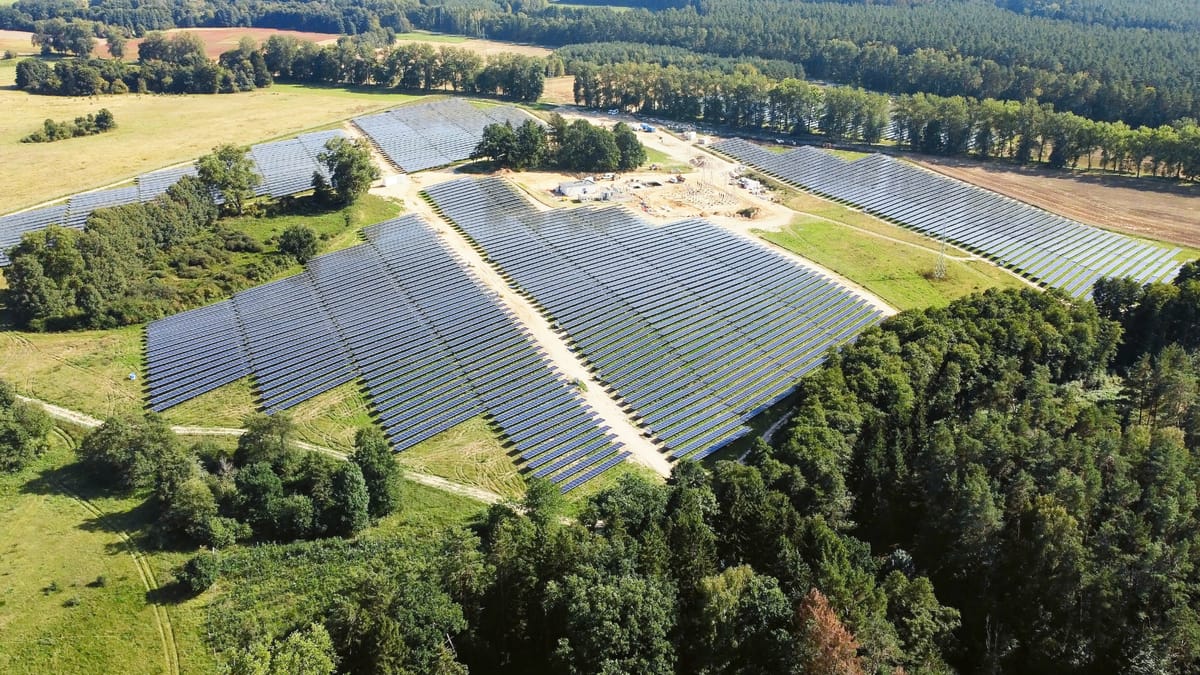
Apple is accelerating European investment in renewable energy sources, with Poland at the centre of this strategy. The company has announced that it wants to fully offset the energy consumed by users of its devices in Europe by 2030. This is an ambitious goal – especially in countries such as Poland, where the energy industry is still based on coal.
The company is launching projects with a total capacity of 650 MW – with wind and solar farms in Poland, Romania, Greece, Italy, Latvia and a new farm already in operation in Spain. Total production is expected to reach more than one million megawatt hours per year, to offset the charging of iPhones, Macs and iPads by European users. The budget? More than $600 million.
Poland: Test of the credibility of Apple’s transformation
The most interesting case in this puzzle is Poland – a country with one of the most carbon-intensive power grids in Europe. Here, Apple is supporting the construction of the 40 MW Ecoenergy photovoltaic farm, which is due to start operations later this year. However, it is not all about symbolism. The choice of Poland is a signal that Apple wants to invest where the real impact on reducing emissions is greatest, and not just where renewable energy is available ‘off the shelf’.
It’s also a gesture to local regulators – pressure for corporate decarbonisation is growing and projects like this can become an argument in the discussion about technology investment in the region.
Central Europe as a Big Tech energy laboratory
Apple is simultaneously investing in a 99 MW wind farm in Romania (in partnership with Nala Renewables and OX2) and has signed its first corporate PPA in Latvia – 110 MW of solar from European Energy. This is important, as the PPA market in Central and Eastern Europe has so far lagged behind Western Europe.
A 131 MW full-scale farm, purpose-built for Apple, is already in operation in Segovia, Spain. The company is not revealing whether the power will go directly to its infrastructure or serve as a market balance, but one thing is clear: Apple is starting to think like an energy operator.
Why does it matter?
Product use – device charging – accounted for 2024. 29% of Apple’s total emissions. This is the area over which Big Tech has the least control, because it depends on the energy mix of individual countries. That’s why Apple doesn’t wait for governments – it builds its own sources.
Looking ahead to 2030, Apple and its suppliers have already procured 19 GW of RES power for factories and data centres. Now the company is transferring this model to end users. It’s a precedent that could have a knock-on effect – Google and Microsoft are also declaring climate neutrality, but none yet conduct such extensive consumer energy balancing.
For Poland, Apple’s projects are more than PR. It is a signal that the country – despite its coal heritage – can become an arena for corporate investment in renewable energy. If today Apple finances photovoltaic farms, tomorrow it may look to Poland for data centres or service hubs – provided the energy really does go green.