The data centre gap is growing. Old systems can't cope with AI, power and regulation

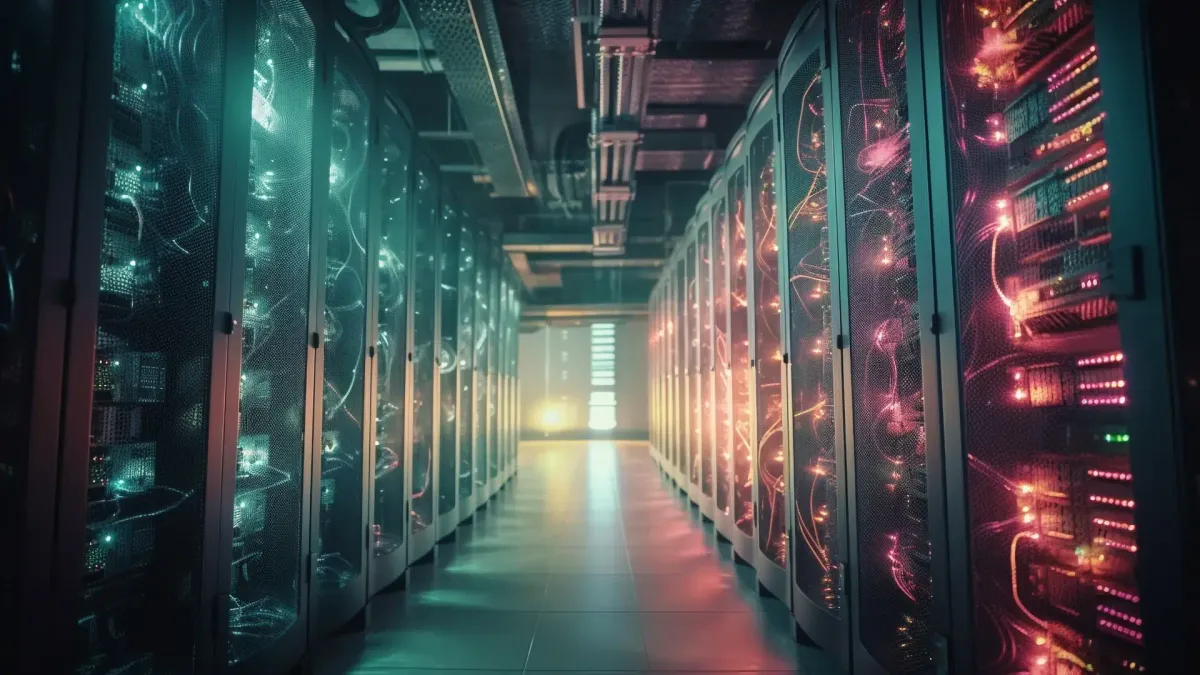
Traditional data centres are failing to meet the demands of the new era. According to Lenovo’s ‘Data Centre of the Future’ study, almost half (46%) of IT managers in EMEA admit that their current infrastructure does not support power and CO2 reduction goals. This gap becomes critical in the face of increasing resource appetite from artificial intelligence and automation, clashing with the harsh realities of European energy regulations.
The pressure on the AI industry is growing from three directions simultaneously. Firstly, AI workloads are rapidly increasing the demand for power. Second, European regulatory requirements, aiming for climate neutrality by 2030, are forcing unprecedented efficiency. Thirdly, regulatory issues are redefining architecture. As many as 99% of IT decision-makers indicate that data sovereignty – i.e. full control over the location and processing of data – will define the design of future centres. At the same time, 94% of respondents identify low latency as a key business requirement, driven by real-time applications and edge computing.
The existing model, based mainly on air cooling, is no longer sufficient. In response, Lenovo, in collaboration with engineering firm AKT II and architects from Mamou-Mani, is proposing a radical paradigm shift, betting on liquid cooling. This technology, which is significantly more energy efficient, is the foundation for conceptual designs for decades to come.
These visions range from data centres suspended in the stratosphere and powered by solar energy (‘Floating Cloud’) to modular urban facilities (‘The People of Data’). The latter, located near watercourses, could return waste heat to local grids, heating schools or homes. Another idea is the adaptation of disused spaces, such as bunkers or tunnels, which minimises the impact on the surroundings and naturally increases safety.
These concepts have one common denominator: a move away from adapting old solutions. Lenovo stresses that in order to meet the dual challenge of growing demand for power and stringent regulatory requirements, companies need to change their mindset. Sustainability must be an integral part of the project from the outset, not an expensive add-on.